
Minimize farm energy and water usage with a pump variable frequency drive
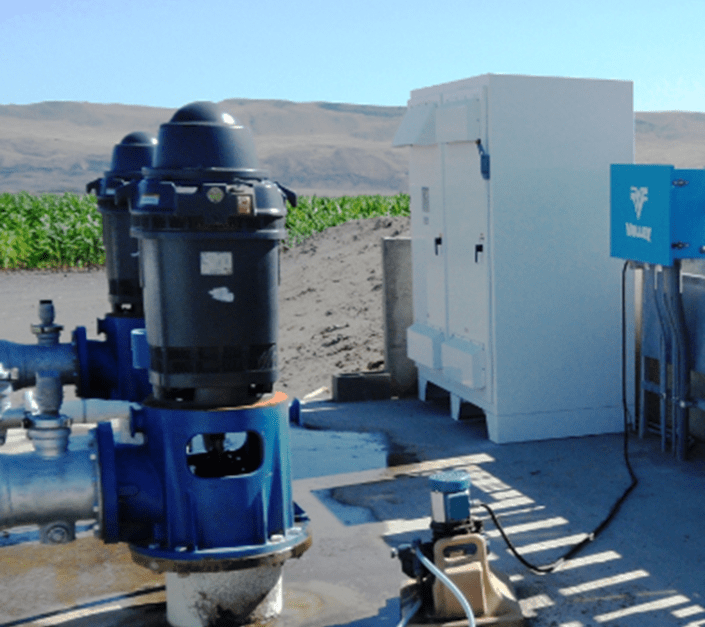
Crop farms, dairy operations, and wineries experience high costs just to keep their businesses in operation. Adding variable frequency drives (VFDs) to irrigation pumps can be a simple way to optimize lower electricity use and reduce utility bills.
VFDs operate as advanced motor controllers that adjust a motor’s speed to operate only at the speed necessary for the task at hand, reducing energy consumption and wear on the equipment. They prevent electrical surges and “soft start” the motor, which means they steadily raise the power until the motor reaches the necessary operating speed. For pumps and fans, energy use drops much faster than motor speed, so even a modest reduction in motor speed can deliver substantial energy savings. The ramp up time is programmable and can be set in the field for optimum results.
The Agriculture Energy Savings Action Plan (AESAP) offers cash rebates to help offset the costs of upgrading well and booster pumps on your farm.
Pump VFDs can offer many other benefits to your operation, including:

Extended lifespan of
your irrigation system

More controlled
water pressure and flow

Less waste
from runoff
If you’ve recently installed pump VFDs either on a well or booster pump, you may be eligible for a retroactive rebate.
Learn how much you can save by installing a well or boost pump with our interactive calculator below:
Irrigation Pump VFD Rebate Calculator
Rebates apply only to agricultural greenhouses heated with natural gas supplied by PG&E. Greenhouses on residential gas meters or using other heating fuels such as propane are not eligible.